


Taking the car in for repairs can lead to a discussion with a mechanic who knows each part of every last car, but how do you know that the suggestions you get are worth your dollar? Car and Driver reports on which extras to choose when you go in for a check-up: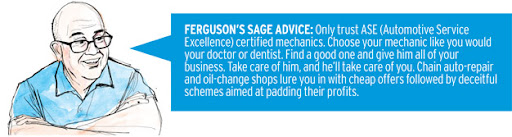
Any time we take a car into the shop and someone starts a sentence with “You know, while we’ve got it in here . . .” our BS meter goes off. Is he looking to help us out or just to make a quick buck? We asked longtime C/Dfriend, master mechanic, and auto-service instructor Russ Ferguson his thoughts on several common upsells. Their utility is rated on the Ferguson scale, which is to say out of five stars.
Read the full story here.
Source: blog.caranddriver.com
Monday, October 22, 2012
What To Do When You Take The Car In
Posted by Laurel Auto Group on 7:42 AM
Businesses get Creative with Support for United Way
Posted by Laurel Auto Group on 7:35 AM
The local Tribune-Democrat reports on how businesses are getting creative in their support for the United Way.
Dave Sutor
— Businesses across Cambria and Somerset counties find simple, creative and fun ways to raise funds for the United Way of the Laurel Highlands every year.
There are car washes, Wii competitions, dart tournaments, gift-card giveaways, paid days off, limo lunches, turkey trots and more. Some companies offer easy payroll deductions.
How To Share The Road With Truckers
Posted by Laurel Auto Group on 6:45 AM
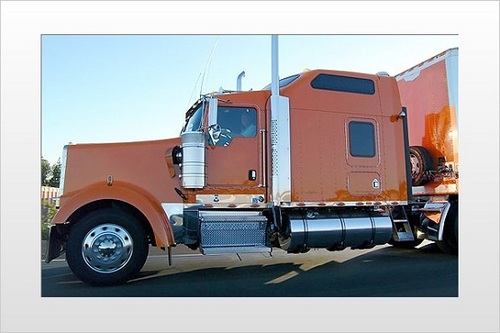
Everybody has a horror story to tell about an encounter they've had with an 18-wheeler on the Interstate, and how they were nearly killed by the inattentiveness of the truck driver. News programs like Dateline NBC and 60 Minutes feed this fear with selectively edited stories regarding truck safety. But what nobody seems to consider is that they themselves may have caused the problem because of ignorance about what is involved in driving a truck, or by engaging in righteous driving behavior that did nothing but endanger their own lives and those of the people they care most about.
Personally, we've seen rude truckers hog the road, and we've seen dimwitted drivers set themselves up for what could be a very painful, if not deadly, lesson. Furthermore, not all trucks traveling the nation's highways are properly maintained, due to a lack of finances or pure laziness. But for most truck drivers, who are paid by the mile and are held responsible for damaged goods, their lives and livelihoods depend on driving a well-maintained truck carefully, and getting freight to its destination on time.
Tractor trailer trucks are responsible for carrying nearly 30 percent of all the cargo shipped in the United States. Technology and improved roadways have allowed the use of trucks for shipping to increase steadily since the 1920s, resulting in larger vehicles and heavier loads. Yet, traffic fatalities involving trucks have steadily declined during the past 50 years, except for a small spike upward in the early 1980s right after the trucking industry was deregulated. Fatalities due to accidents involving semi trucks total 5,000 annually on average, with the vast majority of those fatalities suffered by occupants of passenger vehicles that collided with a truck. As motorists who must share the road with semi trucks, we can do our part to help reduce this number even further if we simply take the time to follow a few simple driving rules and try to understand how difficult it is to maneuver a tractor-trailer in traffic.
We asked Michael Taylor, transportation special programs developer for the Tractor Trailer Training Program at Triton College in River Grove, Ill., what the top five pet peeves truckers had with fellow motorists were. Here is his list:
1) Riding in a trucker's blind spots. Trucks have large blind spots to the right and rear of the vehicle. Smaller blind spots exist on the right front corner and mid-left side of the truck. The worst thing a driver can do is chug along in the trucker's blind spot, where he cannot be seen. If you're going to pass a truck, do it and get it over with. Don't sit alongside with the cruise control set 1 mph faster than the truck is traveling.
2) Cut-offs. Don't try to sneak into a small gap in traffic ahead of a truck. Don't get in front of a truck and then brake to make a turn. Trucks take as much as three times the distance to stop as the average passenger car, and you're only risking your own life by cutting a truck off and then slowing down in front of it.
3) Impatience while reversing. Motorists need to understand that it takes time and concentration to back a 48-foot trailer up without hitting anything. Sometimes a truck driver needs to make several attempts to reverse into tight quarters. Keep your cool and let the trucker do her job.
4) Don't play policeman. Don't try to make a truck driver conform to a bureaucrat's idea of what is right and wrong on the highway. As an example, Taylor cited the way truck drivers handle hilly terrain on the highway. A fully loaded truck slows way down going up a hill. On the way down the other side of the hill, a fully loaded truck gathers speed quickly. Truckers like to use that speed to help the truck up the next hill. Do not sit in the passing lane going the speed limit. Let the truck driver pass, and let the Highway Patrol worry about citing the trucker for breaking the law.
5) No assistance in lane changes or merges. It's not easy to get a 22-foot tractor and 48-foot trailer into traffic easily. If a trucker has his turn signal blinking, leave room for the truck to merge or change lanes. Indicate your willingness to allow the truck in by flashing your lights.
According to "Sharing the Road," a booklet distributed by John Deere Transportation Insurance, the three most common types of accidents involving heavy trucks involve the following:
1) Crashes caused by the truck's inability to stop in time.2) Crashes caused by a motorist trying to pass a truck on the right while the truck is making a right-hand turn. Also known as the right turn squeeze.3) Crashes caused by a motorist riding in the trucker's blind spots. Use the following rule of thumb: If you cannot see the truck driver in his mirrors, he probably cannot see you.
By taking simple common-sense steps to protect yourself and your family when driving near large trucks, traffic fatalities will continue to drop. Over the years, the trucking industry has improved the quality of truck drivers by making it more difficult to qualify for and keep a Commercial Driver's License (CDL). Mandatory drug testing has also been instituted. In fact, the National Highway Traffic Safety Administration (NHTSA) published the following data in 2008. The intoxication rate for drivers involved in fatal accidents was:
27% for motorcycle riders 23% for light truck drivers (pickups and SUVs, that is) 23% for passenger car drivers 1% for truck drivers
Still, more work must be done to combat tightly scheduled deliveries, overbearing stacks of paperwork and driver fatigue caused by federal regulations that work against the human body's natural circadian rhythm.
After meeting with truck driving instructors at Triton College, with representatives from the Illinois Transportation Association and learning what it takes to pilot a tractor-trailer by taking the wheel myself, we joined Taylor for a ride in a brand-new empty tanker truck.
We covered suburban roads during a half-hour loop just to the southeastern side of O'Hare airport. During our 30-minute ride, two motorists turned left across traffic directly in front of the truck. One young woman in a Toyota Celica crossed no more than 50 feet in front of us as she zoomed onto a side street. An older couple in a Dodge Grand Caravan turned in front of our International tractor, and incredibly, slowed so they wouldn't scrape the van on a steep driveway apron to a convenience store. A dude in a Camaro RS blasted by on the left, cut in front of the truck and stopped at a red light we were approaching. When the light turned green, he turned right.
These are the kinds of driving habits that we must break for truck-related accident rates to drop even lower. After a day at truck driving school, we left Chicago for Denver in a Subaru Outback. During that evening and the next day traveling I-80 and I-76, we were keenly aware of the needs of the truckers with whom we shared the road. We behaved more courteously toward truck drivers and fellow motorists than usual, and exercised more patience. We doubt very much that by driving more defensively and less aggressively we arrived in Denver any sooner than we would have had we not let that Kenworth into our lane back in Iowa or had we tried to beat that Freightliner to the construction zone near Lincoln, Neb. We do feel, however, that our trip was a safer one, that we had done our part to make highway travel better. Now it's time to do yours.
Source: Edmunds.com
Friday, October 19, 2012
Vampire 5k Run
Posted by Laurel Auto Group on 5:21 AM

Help The American Red Cross save lives with the Vampire 5k walk/run on Saturday, October 20th in the JARI drive area. Details at: http://tinyurl.com/johnstownvampire
Friday, May 11, 2012
Monkey Business
Posted by Laurel Auto Group on 12:30 PM
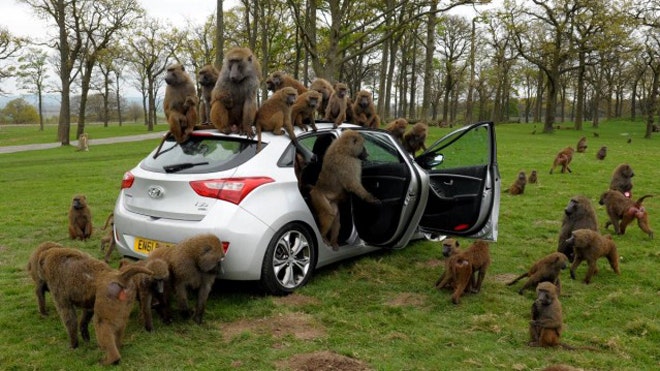
If you wanted to test a car for durability, is a pack of 40 babboons something that would even come to mind?

Fox News has a delightful report about the lengths to which Hyundai has gone to stress test its i30 model (UK cousin of the Elantra):
Fox News has a delightful report about the lengths to which Hyundai has gone to stress test its i30 model (UK cousin of the Elantra):
Weird, but true: Hyundai recently loosed 40 baboons on the latest Hyundai i30 hatchback. The i30 shares most of its essentials with the Elantra, though it's a hatchback in the case of the monkey-infested durability tester.
Hyundai claims it's the first test of its kind by a U.K. manufacturer, implying that some other manufacturers have done this as well. We don't recall the other occurrences, and we think that sort of thing would stick with us.
We could rattle off a dozen puns, but we'll let Hyundai's official statement, courtesy of product manager Felicity Wood, do the work: "At Hyundai we believe in new thinking, which is why we decided to take a new approach with this durability test. You have to be pretty brave to subject a car to the most rigorous quality testers in the world, and the monkeys certainly gave our New Generation i30 a thorough examination! The fact that it survived with only a few scrapes is testament to the way a modern Hyundai is designed and engineered. We really do give a monkey’s about building tough cars!There's even a video to see just how wild things got:
No, that doesn't make any sense to us, either. That said, it was apparently a good time for the monkeys, and we can get behind that. "For a baboon, to have a car to play with for a whole day is manna from heaven!" said David Ross, manager at Knowsley Safari Park, where the "durability test" was held.
According to Hyundai, the paint was scraped a bit, and the fabric of the seats was "tested" by lunching monkeys, but the car came through with shining colors after 10 hours of prodding, poking, and climbing.
Wednesday, May 9, 2012
Hyundai Hydrogen
Posted by Laurel Auto Group on 12:12 PM

The Hyundai Tuscon ix is set to premiere next year in 2013. Of all the big automakers planning to eventually release hydrogen vehicles, Hyundai is about to jump ahead of all of them, reports gas2.org
Toyota, Honda, and GM are all planning their hydrogen fuel cell vehicles (FCEVs) to launch in 2015. However, Hyundai will be the first to test the market, with 1,000 units actually going on sale next year.And while some of the talk about hydrogen has been dismissive, the fact remains that all the
The price tag of the hydrogen Tucson ix will be $88,550. Undoubtedly a steep price, and with the leaps and bounds in electronic vehicle (EV) technology causing lower prices for EVs, hydrogen may have missed the market. Also, if you don’t live near one of the handful of pilot hydrogen filling stations, you are SOL my friend.What would you like to see in the transition off of fossil fuels? Do you think hydrogen is the future of automotive power or will EVs be the ultimate winner? Let us know in the comments.
Yet for all the naysayers of hydrogen — the fuel cells are expensive and hydrogen fill up stations are not very common– the fact remains that large amounts of major car manufactures are pursuing the technology. Hyundai has not given details about where the first 1,000 hydrogen FCEVs will ship, but it is most likely that the majority will be sent to Europe.
…hydrogen is a major emerging player in Europe, with FCEVs going beyond cars to include buses and other heavy vehicles. There are a few pilot programs in the U.S., mostly in California and New York, but hydrogen has a much more devout following in Europe.
Friday, May 4, 2012
Brake Overrides Coming to All Models
Posted by Laurel Auto Group on 7:30 AM
After numerous and worrisome stories in the news about uncontrollable acceleration, Hyundai has added a new feature to come standard on all models. From USA Today:

The technology lets drivers control a vehicle's speed and stop it in the event of an unintended-acceleration incident, Hyundai said. If sensors recognize that the gas and brake pedals are pressed at the same time, the brake action takes precedence to safely slow the car.

Inability of the brakes to stop the vehicle when the throttle was jammed was a factor in the incidents that led to Toyota's massive recalls in 2009 and 2010.
With Hyundai's system, "any brake pedal input by the driver, even with a runaway throttle condition, completely overrides any throttle malfunction," Robert Babcock, director of certification and compliance affairs for Hyundai's technical center, said in a statement. "It is no longer possible to have increasing engine power once the brake pedal is depressed by the driver."
Hyundai joins other maker who already use or are adding similar systems. BMW has made it standard for several year and all Chrysler products since 2003 have brake override systems. All 2011 and newer Toyota models have it, as well as model-year 2012 GM and Mazda vehicles.
More automakers will likely follow suit. And last month, the National Highway Traffic Safety Administration began reviewing a proposal to require brake override systems on all new vehicles.


